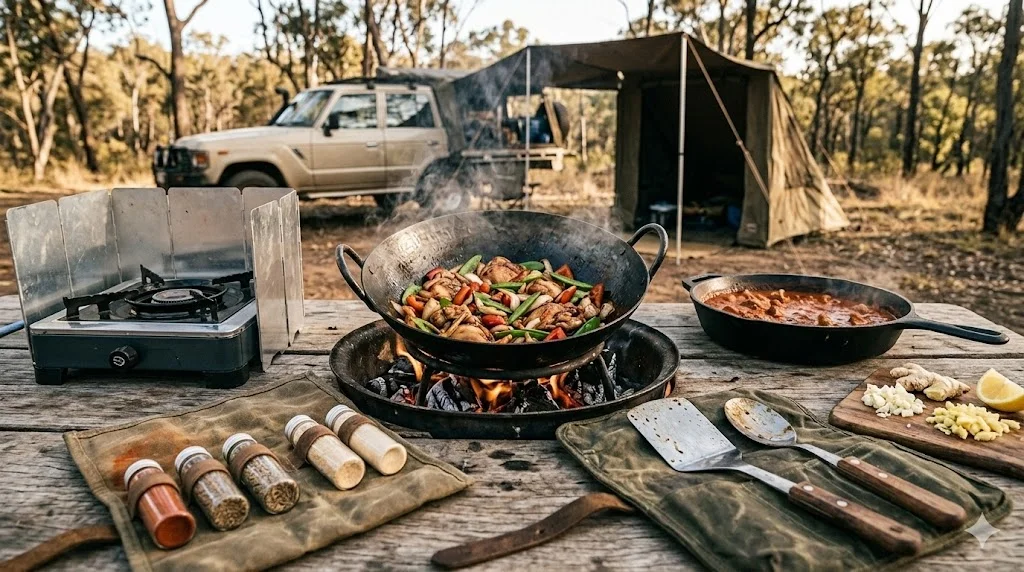
In the Australian outback, your camp kitchen gear is more than just tools—it’s the difference between a soggy, uninspired meal and a restaurant-quality feast under the stars. Cast iron camp cooking is the gold standard for overlanders because of its thermal mass and high heat retention. Whether you’re searing a freshly caught Barramundi or baking a golden damper, understanding how to manage the heat of a forged iron wok or heavy-duty skillet is a fundamental bush skill. This guide dives deep into technical maintenance, heat management, and seven field-tested recipes.
The Science of Searing: Heat Sources Compared
One of the biggest hurdles in bush cooking is fluctuating heat. Unlike your kitchen at home, a campfire or gas burner is affected by wind, wood density, and ambient temperature. Cast iron acts as a “thermal battery,” smoothing out these spikes to ensure your protein doesn’t drop in temperature when it hits the pan.
| Heat Source | Best For | Pro Tip |
|---|---|---|
| Gas Stove | Stir-frys, quick sears, sauces. | Use a stove windscreen to prevent heat loss in the Pilbara wind. |
| Gidgee Coals | Curries, stews, slow-baking. | Place the pan directly on red-hot coals, not active flames, to avoid scorching. |
| Open Fire | Boiling water, intense searing. | Use a tripod or heavy-duty grate to ensure a stable cooking surface. |
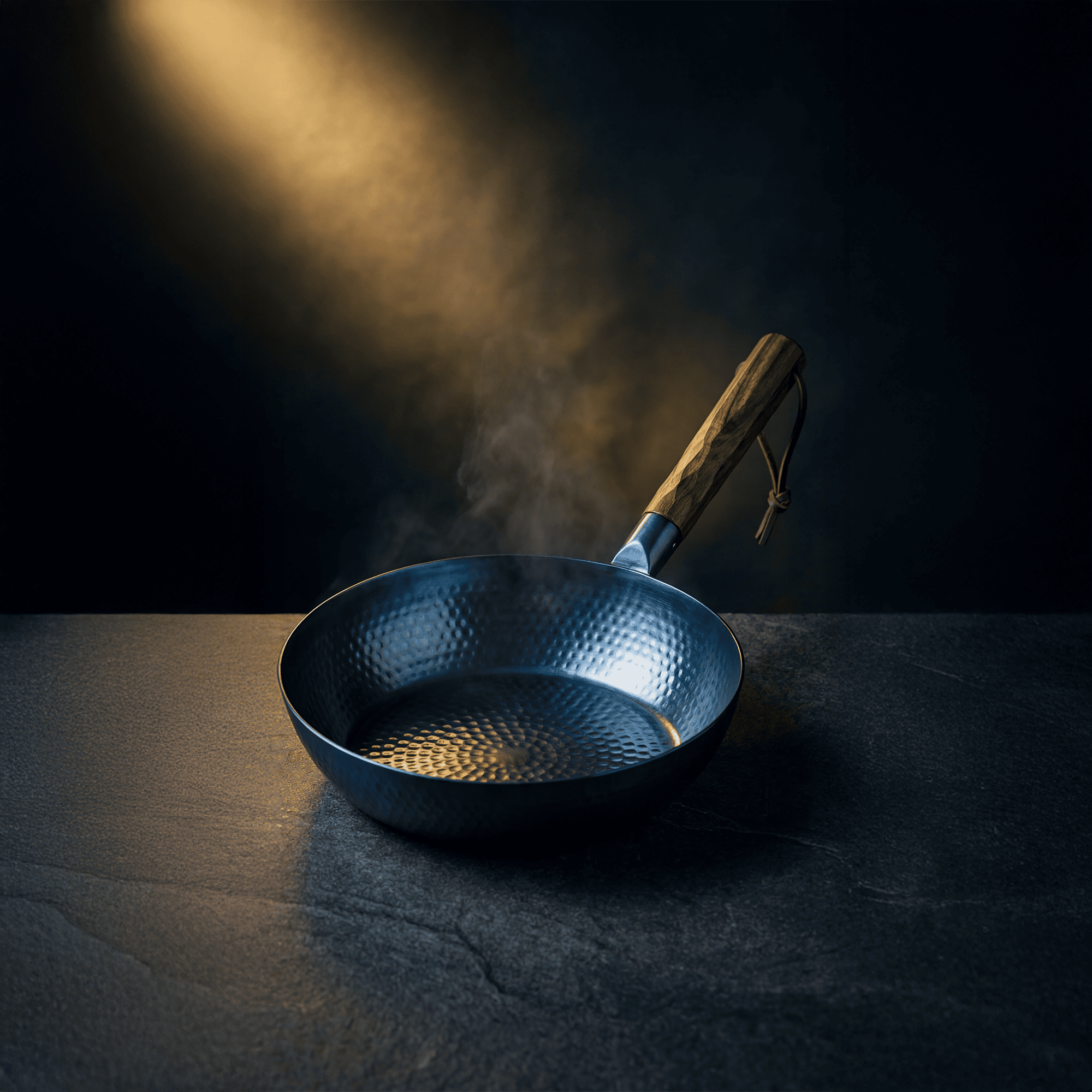
Traditional Craft
Forged Iron Traditional Wok
Hand-hammered for superior heat distribution. Lighter than cast iron but with identical non-stick properties once seasoned.
Pre-Trip Prep: The “Mise en Place” of Camping
Cooking in the bush shouldn’t mean spending 2 hours chopping. To maximize your time by the fire, follow the 80/20 Rule of Camp Cooking: do 80% of the prep at home so the 20% by the fire is pure enjoyment. Pre-chop vegetables and store them in reusable silicone bags. Pre-marinate your chicken and freeze it—it will act as an ice brick in your 12V fridge for the first 24 hours.
7 Master Recipes for the Australian Bush
1. High-Heat “Kimberley” Stir-Fry
Technical Secret: Wok Hei (Breath of the Wok). You need your forged iron wok to be smoking. This caramelizes the sugars in your soy and ginger almost instantly. Add protein in small batches to ensure the iron doesn’t cool down.
2. One-Pan Red Dust Curry
Method: Iron is perfect for blooming spices. Toast your cumin, coriander seeds, and turmeric in dry iron for 60 seconds before adding oil. This releases the essential oils that make a campfire curry superior to anything made in a thin pot.
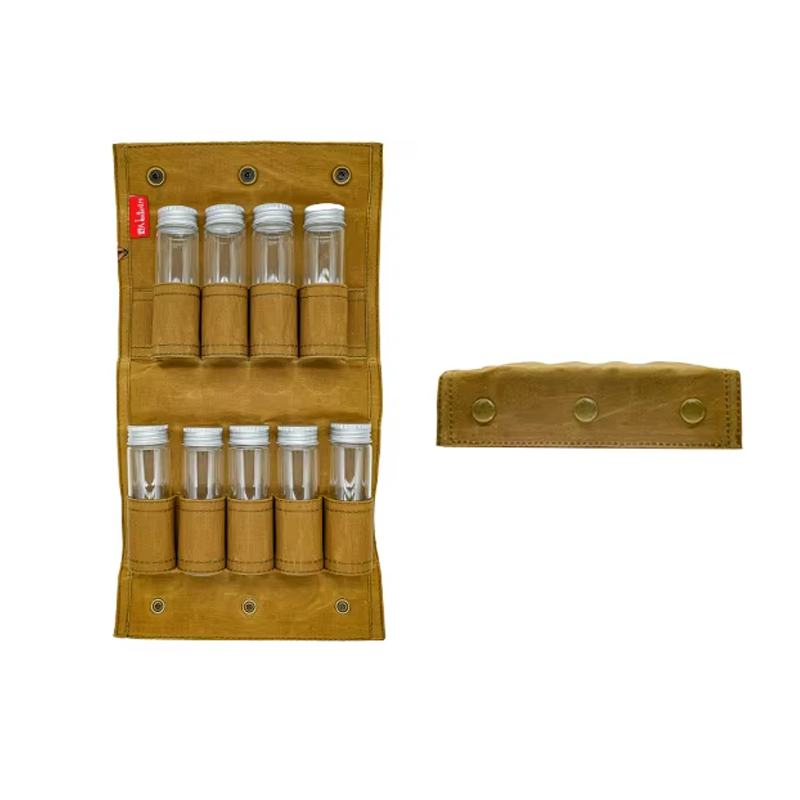
Essential Kit
Canvas Spice Storage Bag
Carry 9 high-quality spices in glass vials. Protected from moisture and rattle-free in your 4WD drawers.
3. Seared Barra with Capers & Lemon Butter
Science Tip: The Maillard Reaction. To get that perfectly crispy skin, the fish must be bone-dry. Use a paper towel to remove all surface moisture before placing it skin-side down in a shimmering hot pan.
Long-Term Maintenance: The Seasoning Ritual
Seasoning isn’t a one-time event; it’s a living layer of polymerized oil. Every time you cook with fats like bacon grease or beef tallow, you are reinforcing the non-stick barrier. If your pan looks dull or grey, it’s thirsty. Rub it with a high-smoke-point oil (like Grapeseed or Rice Bran) and heat it until it smokes. Repeat this three times for a bulletproof finish.
Frequently Asked Questions
Can I use cast iron on a glass cooktop?
Why is my food turning black in the pan?
Is iron better than stainless steel for camping?
Invest in quality gear that tells a story. Every scratch and layer of seasoning on your OutBakka ironware is a memory of a trip. Explore our full camp kitchen and cooking range and start building your legacy kitchen today.