Lighters fail. Matches get wet. Knowing how to start a fire with flint and steel is a fundamental bushcraft skill that works when everything else doesn’t. It’s not complicated, but it does require technique and practice — and the right setup. This guide walks you through the complete process, from understanding how the friction spark works to building a fire that catches first time in Australian bush conditions.
How to Start a Fire with Flint and Steel: Understanding the Basics
The flint-and-steel method works by striking a high-carbon steel striker against a sharp edge of flint (or similar hard rock) to create sparks hot enough — around 1,300°C — to ignite a prepared tinder bundle. The spark itself doesn’t create a flame; it creates an ember in the tinder, which you then coax into a flame through careful blowing and feeding.
Modern ferrocerium fire starters (often called ferro rods or flint rods) work on the same principle but produce significantly larger, hotter sparks at around 3,000°C — making them far more reliable in wet or windy conditions. Most bushcraft kits today use ferro rods rather than traditional flint. Our Flint Rods Kit is a compact, high-output option that belongs in every pack.
Featured Gear
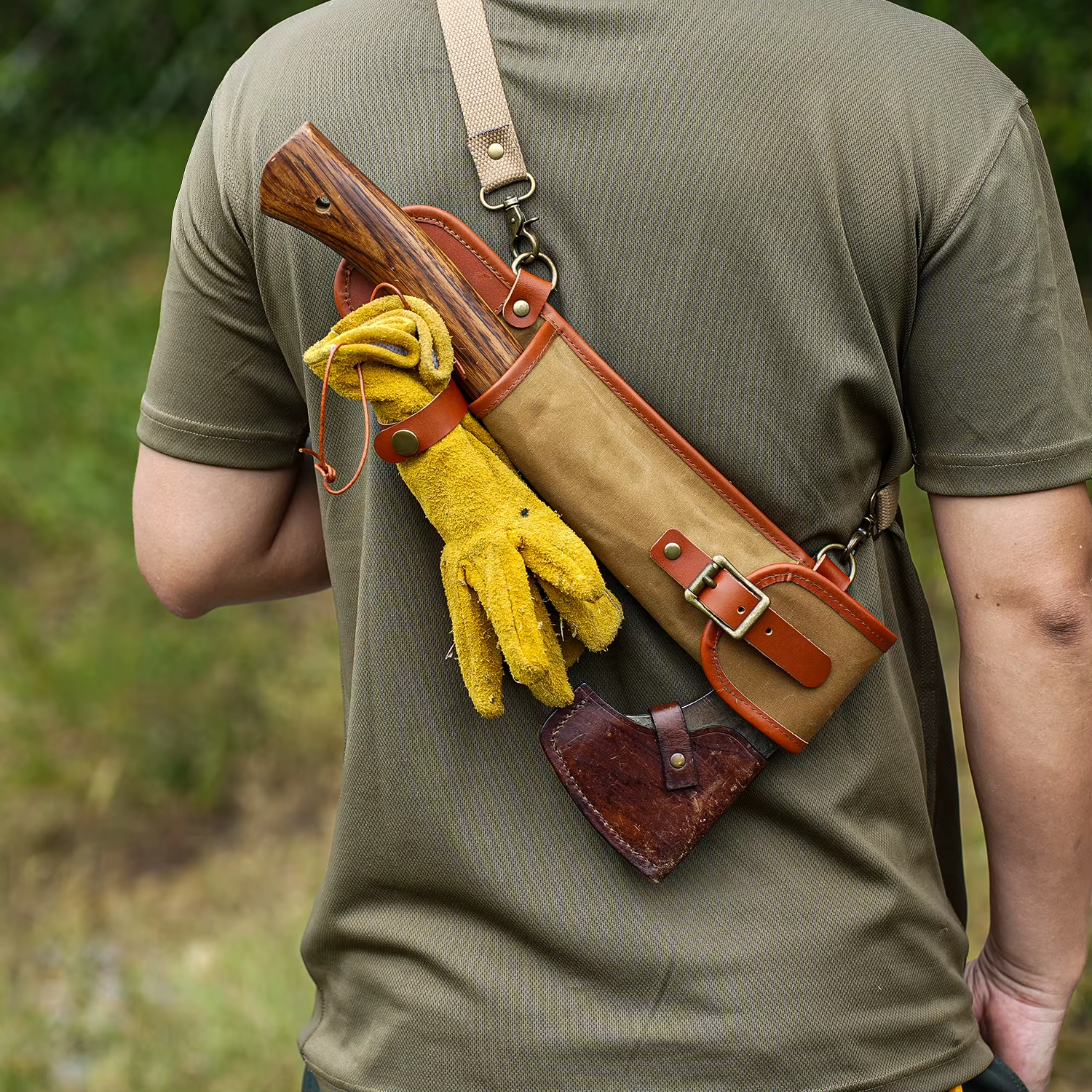
Outdoor Multifunction Flint Rods Kit
High-output ferrocerium rods that produce reliable sparks in wet and windy Australian conditions. Compact enough for any bushcraft kit or emergency kit.
View Product →Step 1 — Prepare Your Tinder Bundle
This is where most beginners fail. The tinder has to be bone dry and fine enough to catch a tiny spark. Don’t skip this step or rush it.
What Works as Tinder in Australian Bush
- Dry bark fibres — paperbark (melaleuca) shredded fine is excellent
- Dried grass — spinifex is particularly good when fully dry
- Seed heads — native grass seed heads, dried kangaroo grass
- Char cloth — cloth pre-charred in a tin; catches sparks perfectly (make some at home)
- Dead bracken fern fronds — inner fibres only, pulled fine
Form the tinder into a loose bird-nest shape — not packed tight, not falling apart. You need airflow through it to convert the ember to flame. A nest roughly the size of your cupped hands works well.
Step 2 — Position Your Striker and Flint
If using a ferro rod: hold the rod in your non-dominant hand, angled down toward the tinder. Press the striker (or the spine of a knife) firmly against the rod. The motion is a single, firm scrape — you pull the rod back toward you while keeping the striker stationary, so the sparks fly downward into the tinder bundle. Do not move the striker forward; pull the rod back.
If using traditional flint and steel: hold the flint in your dominant hand between thumb and forefinger with the sharpest edge facing out. Hold the steel in your other hand. Strike the flint edge downward against the steel with a glancing blow. Direct the sparks down onto a piece of char cloth held just below the flint.
Step 3 — Catch the Spark and Build the Ember
When a spark lands in your char cloth or tinder bundle, you’ll see a small orange glow spreading slowly. Don’t rush to blow immediately — let the ember establish for 2–3 seconds. Then fold the tinder gently around the ember so it’s enclosed but not crushed. Hold the bundle up and blow steadily and gently — not a quick puff, but a long, slow, controlled exhale directed at the base of the ember.
You’ll see smoke increase dramatically. Keep blowing at the same steady pace. The tinder will start to glow more brightly, then suddenly burst into flame. At that point, lower the bundle and feed it into your prepared fire structure.
Step 4 — Build Your Fire Structure
Have your fire structure prepared before you strike any sparks. A tinder bundle with a live ember needs to go straight into a fire — faffing around collecting kindling while your ember dies is a beginner mistake.
Basic Fire Lay for Flint-and-Steel Fires
- Tinder — your prepared bundle (already burning)
- Fine kindling — pencil-thin dry sticks, arranged in a tipi over the tinder
- Medium kindling — thumb-thick sticks, added as the fine kindling catches
- Fuel wood — wrist-thick logs, added once a stable flame is established
Never add large fuel until you have a flame that’s been stable for at least 30 seconds. Too much wood too early smothers the fire before it can establish.
Fire Starting in Wet and Windy Australian Conditions
Most of Australia’s bush is not predictably dry. Coastal areas, rainforest fringe, and elevated inland areas all see conditions where getting a fire started with flint and steel requires extra attention.
- Keep tinder dry in a zip-lock bag or sealed container until needed
- Use your body and pack to block wind while striking — don’t fight the wind, shelter from it
- Find dry tinder from inside a dead log or under dense bark rather than off the ground
- A camp stove windscreen doubles as a wind block for fire starting in open terrain
The camping stove windscreen from OutBakka isn’t just for stoves — it’s an effective wind block for fire starting in exposed locations. Check the full survival tools and fire lighting range for everything you need to start fires reliably in the field.
Key Takeaways
- ✔ Tinder preparation is more important than technique — bone dry and pulled fine
- ✔ Pull the ferro rod back rather than pushing the striker forward
- ✔ Let the ember establish before folding the tinder bundle
- ✔ Blow long, slow, and steady — not quick puffs
- ✔ Prepare your fire structure before striking sparks
- ✔ Carry char cloth — it catches sparks more reliably than raw tinder
Frequently Asked Questions
Is flint and steel fire starting hard to learn?
The striking technique takes about 30 minutes of practice to get consistently right. Tinder preparation is the part most people underestimate. Practice at home with prepared char cloth and dry tinder before you rely on it in the field. Once the muscle memory is there, it becomes very reliable.
What is the difference between traditional flint and steel and a ferro rod?
Traditional flint and steel uses a high-carbon steel striker against actual flint (or quartzite, chert, or jasper). It produces smaller sparks and requires char cloth to catch them reliably. A ferro rod (ferrocerium) produces much larger, hotter sparks — around 3,000°C — and can ignite finer tinder directly. For practical bushcraft and survival, ferro rods are more reliable and easier to learn.
What rocks can I use if I don’t have a flint stone?
Quartzite, chert, jasper, and obsidian all work as flint substitutes. You need a rock that is harder than the steel and has a sharp edge that can produce sparks when struck. If you’re carrying a ferro rod, this is irrelevant — ferro rods are much more practical for Australian conditions than sourcing wild flint.
Can I start a fire with flint and steel in rain?
Yes, but you need pre-prepared dry tinder stored in a waterproof container. The ferrocerium rod itself is waterproof — wipe it dry and it works fine. The challenge is finding or carrying tinder that hasn’t absorbed moisture. Char cloth in a sealed tin is the most reliable solution for wet-weather fire starting.
Practice makes this skill permanent. Every trip into the Australian bush is an opportunity to build confidence with flint and steel fire starting. Grab a quality flint rods kit from OutBakka and start practising before your next adventure — your future self in a wet camp will thank you.