The Kimberley is one of the last genuinely wild places on earth. Massive gorges, ancient rock art, deserted beaches, and tracks that will test your vehicle and your nerves in equal measure. But getting it wrong out here isn’t just inconvenient — it can be genuinely dangerous. These Kimberley camping tips for Western Australia are built around real experience, not brochure copy. Read them before you book anything.
Kimberley Camping Tips: Getting the Season Right
The Kimberley has two seasons that matter: the Dry (roughly May to October) and the Wet (November to April). Most travellers visit in the Dry. Most tracks are only accessible in the Dry. The Wet brings spectacular waterfalls and empty landscapes but also makes many roads impassable and dramatically increases croc and snake activity around water.
Best window: June to August. Temperatures are manageable (20–30°C days, cool nights), tracks are at their best, and water sources are predictable. July and August book out fast for Gibb River Road — plan at least six months ahead if you want the best camping spots.
Shoulder Season Considerations
May and October are viable but require flexibility. Some waterholes are drying out in October, and May can still see mud on northern tracks. The upside: fewer people. If solitude matters more than perfect conditions, these months deliver.
Permits and Access for Kimberley Camping
Much of the Kimberley sits on Aboriginal land. Getting permits right is non-negotiable — entering without them is both illegal and disrespectful.
- Dampier Peninsula: Requires a permit from the Broome Aboriginal Medical Service or the relevant community. Apply at least 2 weeks ahead.
- Mitchell Falls / Ngauwudu: Managed by DBCA — entry fees apply and camping bookings fill early.
- El Questro: Private station — all visitors pay a per-person entry fee valid for multiple days.
- Gibb River Road stations: Some require property permission to access their gorges and campsites. Check each station individually.
Vehicle Preparation for Kimberley Tracks
The Gibb River Road and most Kimberley tracks are unsealed and rough. Sharp corrugations, river crossings, and loose rock are standard. Your vehicle prep is as important as your camping gear.
- All-terrain or mud-terrain tyres (minimum) — bring at least two full-size spares
- Bash plates on engine, gearbox, and fuel tank
- Long-range fuel tank or serious jerry can capacity (some legs are 200km between fuel)
- Suspension checked and upgraded if carrying heavy load
- Full recovery kit (snatch strap, KERR, MaxTrax, hi-lift)
- Satellite communicator — mobile coverage is effectively zero on most tracks
Pack your recovery and safety gear in our canvas storage and organiser range — tough enough for corrugated tracks and organised enough that you can find things when it matters.
Kimberley Camping Tips: Water, Crocs and Wildlife
Water is everywhere in the Kimberley — and so are saltwater crocodiles. This is not an exaggeration for dramatic effect. Every body of water in the Kimberley should be treated as potentially croc habitat until explicitly confirmed otherwise by rangers or current signage.
- Never swim in, or even stand close to, any waterway without confirmed croc clearance
- Keep 5m back from water edges when filling water containers
- Do not wash dishes or clean fish at the water’s edge
- Keep children and dogs well away from any waterway
- Freshwater crocs exist too and while generally less aggressive, they do bite
Snakes are common, particularly in rocky areas. King Browns and Western Browns are prevalent. Wear closed shoes from dusk, shake out boots before putting them on, and watch where you put your hands when setting up camp or collecting firewood.
Camp Kitchen Setup for Kimberley Trips
Extended Kimberley trips mean multi-day remote camps with no resupply. Your camp kitchen needs to be self-contained and versatile. In the Dry, fire bans are generally not in effect at most sites, so a fire-based cooking setup is viable alongside your gas stove.
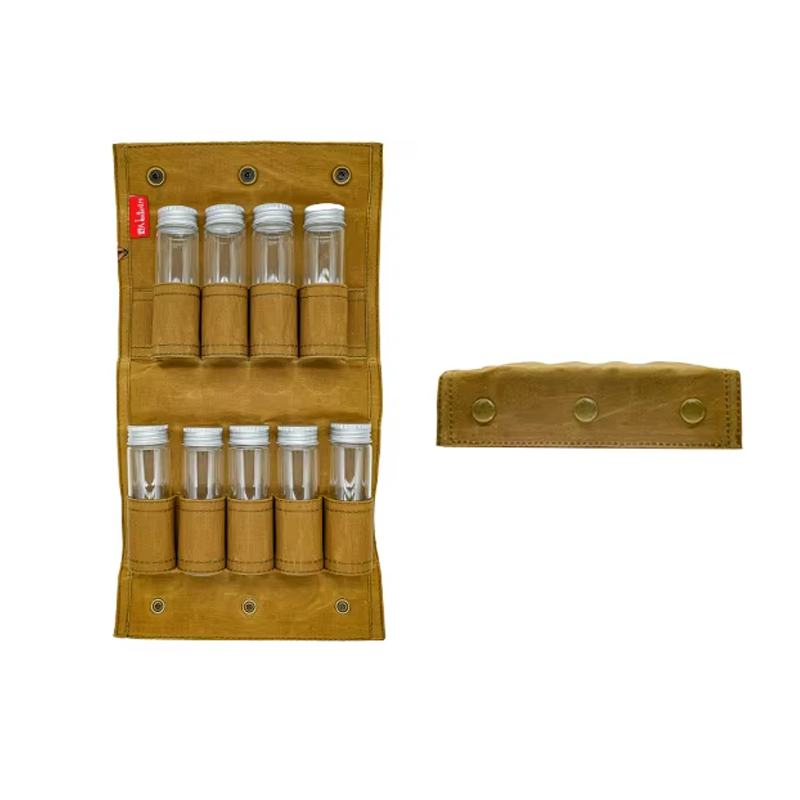
Keep spices and pantry items organised — after a long drive day, the last thing you want is hunting through bags for the paprika. The Canvas Spice Storage Bag from OutBakka holds 9 x 50ml bottles in a compact canvas roll that stows anywhere and survives corrugated tracks without leaking. Your full camp kitchen setup should travel as a single, organised kit.
Featured Gear
Canvas Spice Storage Bag
9 glass spice bottles in a compact canvas roll. Survives corrugated Kimberley tracks and keeps your camp kitchen organised on extended remote trips.
View Product →Shelter and Sleeping in the Kimberley
Nights in the Kimberley Dry season can drop to 10–12°C in June and July, especially elevated inland areas. People underestimate this every year — they pack for tropical warmth and freeze at 2am. A sleeping bag rated to at least 5°C is sensible. Most camping in the Kimberley is tent or swag-based; some stations have powered sites and amenities, but remote camping is very much tent-and-tarp territory.
Wind at some gorge campsites can be fierce in the afternoons. Stakes and guy ropes that actually hold matter — don’t rely on cheap peg-in-soft-soil setups. Check the shelter and sleeping gear range for options suited to variable Kimberley conditions.
Featured Gear
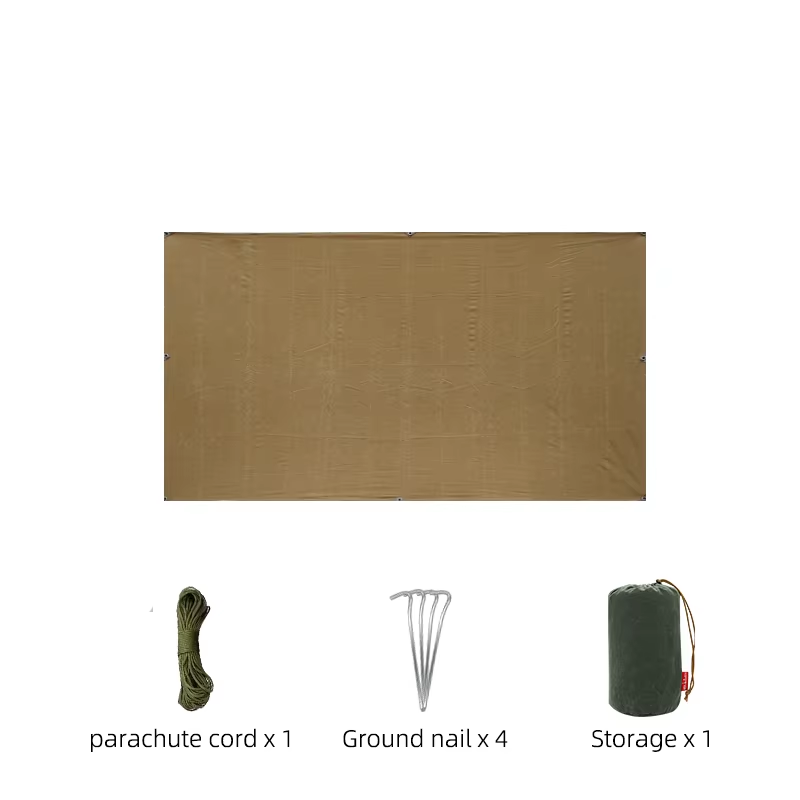
OutBakka Hoochie Shelter
Lightweight, versatile hoochie shelter — set up fast as a rain fly, shade canopy, or emergency shelter. Essential backup for any Kimberley trip.
View Product →Key Takeaways
- ✔ Visit during the Dry season (May–October) — June to August is peak for a reason
- ✔ Sort permits before you leave — Aboriginal land permits are non-negotiable
- ✔ Two full-size spare tyres minimum on Kimberley tracks
- ✔ Every waterway is croc habitat until confirmed otherwise
- ✔ Nights get cold — pack a sleeping bag rated to 5°C
- ✔ Satellite communicator is essential — no mobile coverage on most tracks
Frequently Asked Questions
Is the Kimberley safe to camp in?
Yes, with preparation. The main risks are vehicle breakdowns in remote areas, crocodiles near water, and dehydration in heat. All are manageable with proper planning, the right gear, and a working satellite communicator. Tens of thousands of travellers do the Kimberley safely each year.
Do I need a 4WD to camp in the Kimberley Western Australia?
For most of the interesting stuff, yes. The Gibb River Road, most gorge access tracks, and all remote camping locations require a capable 4WD with good clearance. Some sealed highway-accessible camps don’t need 4WD, but they miss the point of the Kimberley experience entirely.
What is the best time to visit the Kimberley for camping?
June and July offer the best conditions — comfortable temperatures, reliable track access, and most waterholes still full. August is still excellent but some smaller waterholes start drying. Book well ahead: popular stations and gorge camps fill months in advance for peak season.
How many days do you need to do the Kimberley?
The Gibb River Road alone warrants 10–14 days if you want to explore the gorges properly rather than just drive through. A complete Kimberley loop including the Mitchell Plateau, Dampier Peninsula, and Gibb is realistically a 3–4 week trip. Rushing it means missing what makes it special.
The Kimberley rewards people who prepare properly and move at the right pace. Use these Kimberley camping tips for Western Australia to plan smart, gear up right, and explore one of Australia’s greatest wild places with confidence. Find the gear you need at OutBakka — built for exactly this kind of trip.